What are oil slicks?
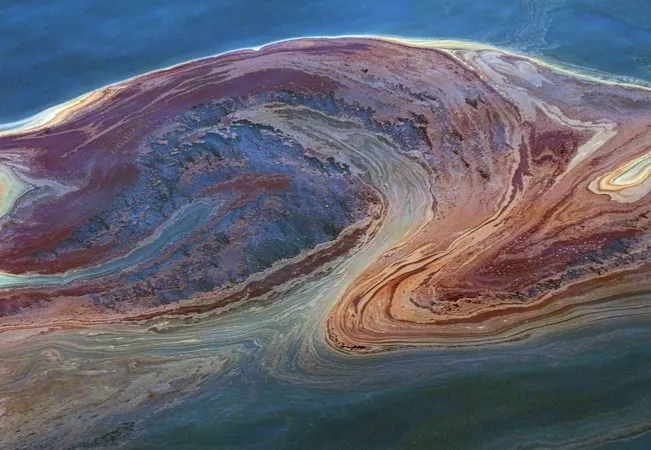
Oil slicks float on oceans and seas, covering them in a thick film of crude or refined petroleum oil. When freight ships carrying tens of thousands of tons of fuel crash, malfunction, or encounter harsh weather, they spill enormous amounts of oil into the water. Since oil and water don’t mix, the oil spreads out into a layer that hovers, as one mass, on top of the ocean.
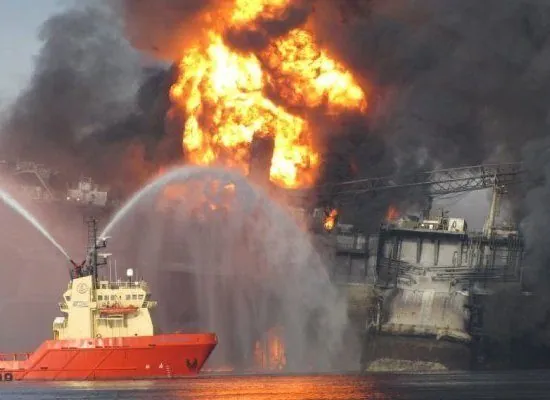
Thousands of oil slicks result from massive oil spills every year. Oil slicks are difficult to control or contain and even more challenging to clean up. Once formed, an oil slick becomes an unpredictable phenomenon. It might end up spreading, migrating, thinning or thickening, moving towards land or further out to sea. An international community of activists, organizers, and technical developers has formed to identify, manage, and eliminate the devastating oil slicks.
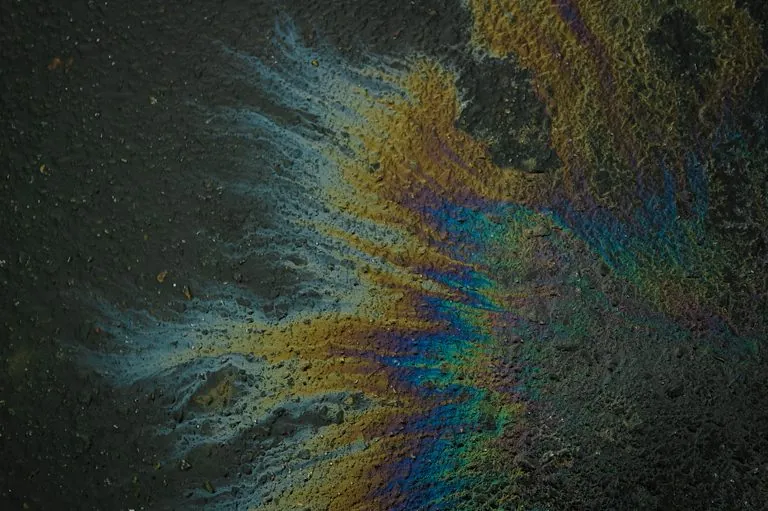
The fate of an oil slick is determined by many factors, including local and regional weather, ocean currents, tides when near a land mass, the relationship between air and water temperature, the chemical composition of the crude or refined oil, wind direction, and the presence of icebergs. Humans must intervene with tracking devices, booms, absorbent materials, and chemical treatments.
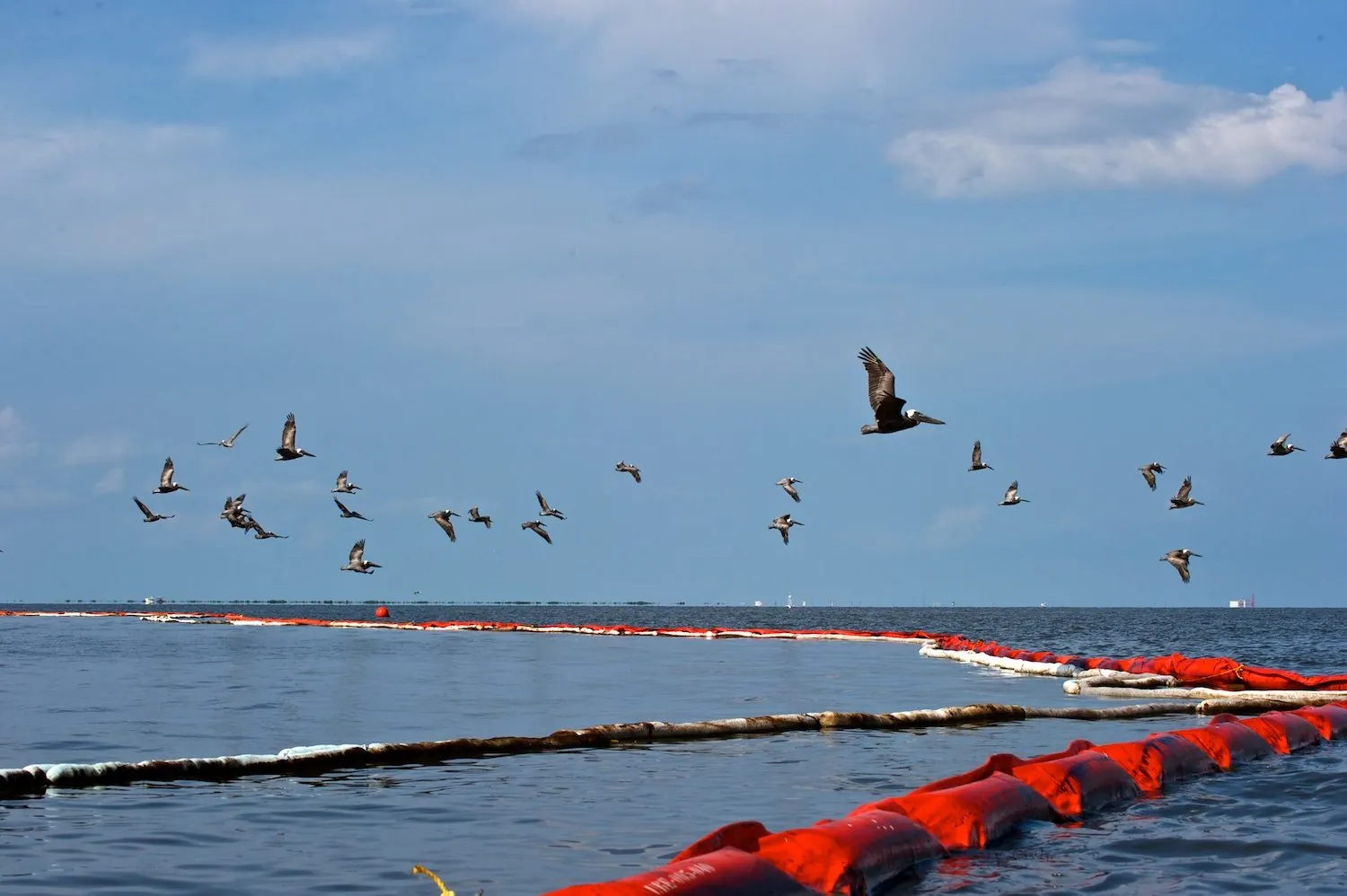
Oil slicks can be diverted or captured using floating booms. These are mechanical blockers that loop around the edges of the slick and possibly squeeze it away from land or relegate it to a controllable area. Sometimes slicks are lit on fire to burn them off. Other times, the physical barriers bring them to an area where they can be removed with sorbent booms. Using absorption or adsorption, the booms catch some of the oil manually. Most of it will be disposed, but some may be re-refined to use as fuel.
 |
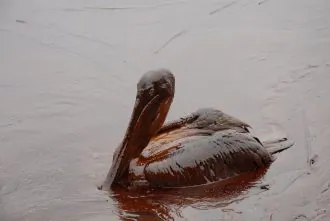 |
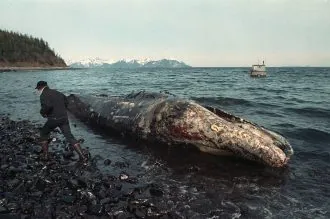
Not surprisingly, oil slicks cause untold damage to algae, seaweed, plant life, fish, birds, sea mammals, shellfish, and the soil and rocks on beaches. Oil sticks to everything, creating multiple mortal hazards. It can prevent dolphins or whales from breathing, drown birds that can’t swim away, or intoxicate fish and animals that drink or eat it. Sand and rocks may need to be dug up and thrown away if oil seepage makes them impossible to clean. Even years after an area has been hit with an oil slick, the ecosystem shows evidence of the disaster with lower biomass and fewer species.
Source: Wisegeek
 Environmental news
22/10/2026
Environmental news
22/10/2026
VIETNAM’S EXPERIENCE IN THE ENVIRONMENT AND DISASTER RESPONSE AT CAFEO 44
Joining two professional groups on environment and disasters at CAFEO 44, Mr. Pham Van Son – Director of the Vietnam Environmental Incident Response Center (SOS Centre), brings experience in resource management and pollution prevention from Vietnamese practices. The exchanges in Bandung show that many international lessons can be applied in the country, and at the […]
FROM CRITICAL COMMUNICATION TECHNOLOGY TO FIELD RESPONSE: HYTERA PARTNERS WITH SOS IN VIETNAM
In its efforts to document and share information regarding environmental incident response, the Vietnam Environmental Incident Response Center (SOS) has collaborated with Hytera to showcase professional operations, technological products, and applications used in incident response preparedness within Vietnam. A choice based on practical experience Hytera has collaborated with entities in various countries; for this particular […]
 Environmental news
22/09/2026
Environmental news
22/09/2026
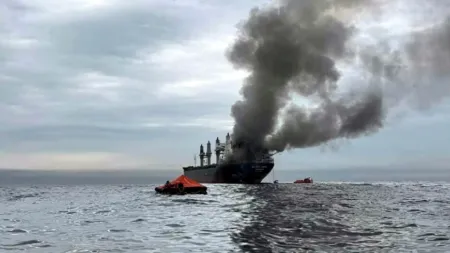
LESSONS FROM THE HORMUZ OIL TANKER INCIDENT: IMPLICATIONS FOR VIETNAM’S MARINE OIL SPILL PREPAREDNESS
The recent oil tanker explosion in the Strait of Hormuz underscores the constant threat of marine pollution along global shipping lanes, where swift containment is vital to preventing ecological disater.