ACCIDENTS IN UNDERGROUND FUEL TANKS: THE ROLE OF OCCUPATIONAL SAFETY IN INCIDENT PREVENTION
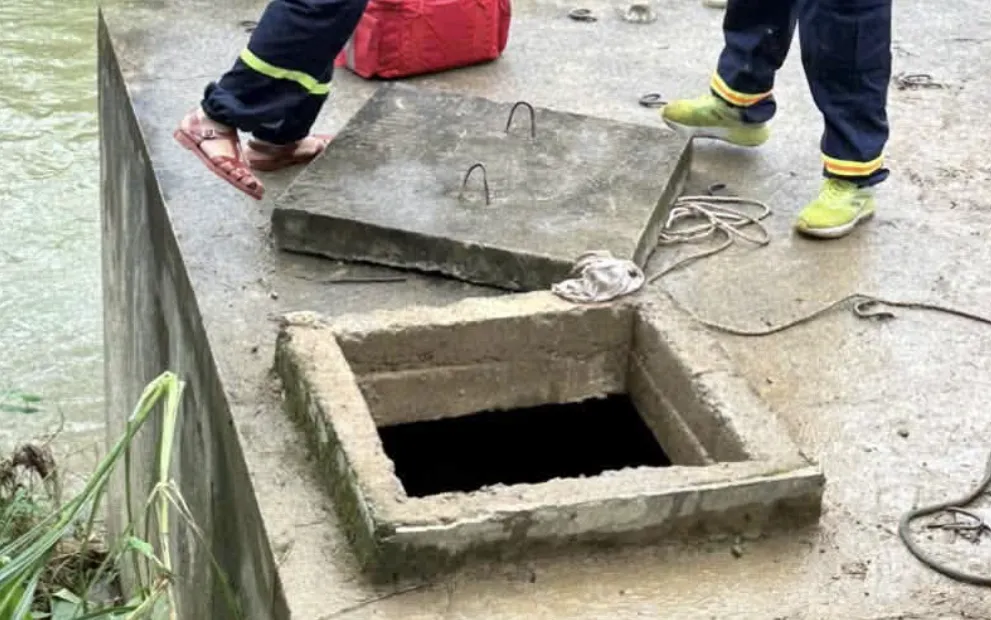
According to information published by VnExpress, during the dismantling and installation of a vapor suction pipe at Gas Station No. 9 on Le Ngo Cat Street, one of the pipes fell into the underground fuel tank. A worker descended into the tank to retrieve the pipe and showed signs of asphyxiation. A colleague who subsequently went down to attempt a rescue also lost consciousness. Both workers were later extracted from the tank but tragically passed away en route to the hospital. The cause of the accident is currently under official investigation.

Gas Station No. 9 (located at 2 Le Ngo Cat Street, Thuan Hoa Ward, Hue City)
This tragic incident highlights a critically important issue: In high-risk work environments, a lack of awareness and emergency response skills can cause an initial minor situation to rapidly escalate into catastrophic consequences.
Unignorable Hazards of Working in Underground Fuel Tanks and Storage Facilities
Underground fuel tanks, storage vessels, and other confined spaces at petroleum facilities present unique, high-risk hazards. Depending on site-specific conditions, workers may face oxygen deficiency, the accumulation of hazardous gasoline vapors or toxic gases, fire and explosion risks, as well as severe evacuation and rescue constraints.
The critical danger lies in the fact that these hazards are not always detectable through normal human senses.
Furthermore, upon discovering a distressed colleague, the instinctive impulse to rescue can lead first responders to become additional victims if they fail to assess atmospheric risks and lack appropriate protective equipment. The incident in Hue serves as a stark reminder of the imperative requirement for pre-established, validated rescue protocols, rather than spontaneous attempts once an incident has occurred.
Practical and Scenario-Based Occupational Safety Training
For petroleum enterprises, occupational safety training must extend beyond mere rule dissemination or theoretical instruction. Workers must be equipped with the capacity to identify hazards and strictly execute correct procedures tailored to specific work activities.
Specifically for work involving tanks, storage vessels, and confined spaces, training programs must focus on the following key areas:
- Hazard Identification and Assessment: Recognizing factors that can lead to oxygen deficiency, toxic gas asphyxiation, fire/explosion, or chemical exposure within the workspace.
-
Pre-Entry Condition Controls: Understanding requirements for atmospheric testing, continuous mechanical ventilation, isolation of hazardous energy sources, and essential pre-entry safety verifications before accessing confined spaces.
-
Proper Use of Personal Protective Equipment (PPE): Selecting, inspecting, and correctly utilizing PPE tailored to the specific nature of the task (e.g., atmosphere-supplying respirators).
-
Supervision and Communication Protocols: Clearly defining roles between authorized entrants, external standby attendants, communication methods, and emergency response triggers upon detecting abnormal conditions.
-
Emergency Response and Rescue Skills: Raising alarms, mobilizing response assets, and executing pre-planned rescue operations; strictly prohibiting unauthorized entry into hazardous zones for rescue without proper training and safety equipment.
These core topics must be tailored to the specific operational conditions, job functions, and risk profiles of each facility. Crucially, theoretical knowledge must be reinforced through hands-on practical exercises, periodic refresher training, and realistic scenario drills.
Enhancing Response Capacity and Risk Mitigation
Drawing upon extensive experience in environmental incident response, the Vietnam Environmental Incident Response Center (SOS Center) identifies training, capacity building, and emergency drills as vital components of corporate risk prevention.
An unfortunate accident serves as a reminder regarding workplace safety procedures at petroleum facilities
Through structured safety training programs, the SOS Center aims to help personnel thoroughly understand workspace hazards, master preventative procedures, and respond effectively to abnormal field situations.
For petroleum trading, storage, and distribution facilities, training programs must closely align with real-world operations, emphasizing scenarios such as confined space entry, asphyxiation hazards, fuel vapor leaks, fire/explosion events, and oil spills.
Beyond technical knowledge, practical training sessions and drills enable enterprises to evaluate operational coordination among workers, management, and response forces; assess equipment readiness; and identify gaps in emergency response procedures.
The objective is not merely to instruct workers on what to do when an accident occurs, but more importantly, to empower them to recognize risks early preventing themselves and their colleagues from entering life-threatening situations in the first place.
Prevention Through Knowledge, Protection Through Practical Capability
No training program can completely eliminate all operational risks. However, systematic training, rigorous work-condition monitoring, and regular emergency drills significantly mitigate risk, prevent panic-driven mistakes, and enhance emergency execution when incidents arise.
For petroleum enterprises, investing in occupational safety training is not merely a matter of regulatory compliance; it is a direct investment in the health and lives of workers, as well as the long-term operational safety and continuity of the business.
Source: https://vnexpress.net/hai-nguoi-tu-vong-khi-xuong-ham-xang-dau-5139443.html
 Environmental news
02/11/2026
RISK IDENTIFICATION AND CAPACITY BUILDING FOR INLAND WATERWAY INCIDENT RESPONSE
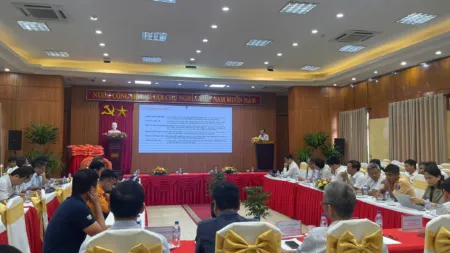
On October 30, a conference on the dissemination and implementation of legislation regarding inland waterway traffic safety in the Southern region took place in Quang Ngai Province. The event gathered representatives from state management agencies, industry experts, local authorities, and enterprises operating in the inland waterway sector. Beyond core topics such as vessel management, crew […]
 Environmental news
22/10/2026
VIETNAM’S EXPERIENCE IN THE ENVIRONMENT AND DISASTER RESPONSE AT CAFEO 44
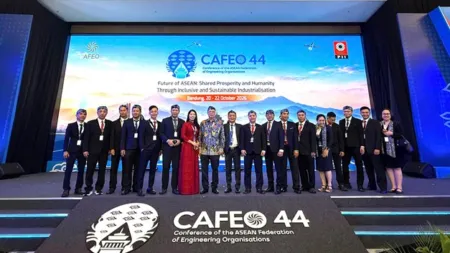
Joining two professional groups on environment and disasters at CAFEO 44, Mr. Pham Van Son – Director of the Vietnam Environmental Incident Response Center (SOS Centre), brings experience in resource management and pollution prevention from Vietnamese practices. The exchanges in Bandung show that many international lessons can be applied in the country, and at the […]
FROM CRITICAL COMMUNICATION TECHNOLOGY TO FIELD RESPONSE: HYTERA PARTNERS WITH SOS IN VIETNAM
In its efforts to document and share information regarding environmental incident response, the Vietnam Environmental Incident Response Center (SOS) has collaborated with Hytera to showcase professional operations, technological products, and applications used in incident response preparedness within Vietnam. A choice based on practical experience Hytera has collaborated with entities in various countries; for this particular […]