POLLUTION LOAD CONTROL AND INTER-REGIONAL RESPONSIBILITY
In water environment management, a key requirement is to accurately determine the assimilative capacity of a receiving water body and to control the quantity of pollutants discharged into it. In practice, assessing this capacity through a generalized, uniform approach may fail to detect instances where the threshold for specific individual pollutants has been exceeded.
During the Second Session of the 16th National Assembly, the issues of controlling pollution loads, managing the carrying capacity of water bodies, and defining responsibilities for cross-regional environmental incidents were raised once again. These topics emerged during discussions on draft laws concerning environmental protection, natural resources, and the marine and island environment.
One metric cannot be used to “compensate” for another
As analyzed by the delegates, a single river or river basin may have already exceeded its carrying capacity for certain pollutants, while still retaining the capacity to absorb others. This necessitates the control of pollution loads for each specific type of pollutant.

Mr. Pham Van Son, General Secretary of the Vietnam Association for Conservation of Nature and Environment (VACNE), has proposed the designation of a clear central coordinating authority, empowered to mobilize resources whenever an incident exceeds the capacity of local authorities to manage it
Agreeing with this perspective, Mr. Pham Van Son – Secretary General of the Vietnam Association for Conservation of Nature and Environment and Director of the Vietnam Environmental Incident Response Center (SOS) argues that when a river segment becomes overloaded with a specific pollutant, regulatory authorities must firmly prohibit any further discharge of that substance into the receiving water body.
Furthermore, efforts cannot be limited to restricting new projects. Existing sources of pollution must also be reviewed, with measures implemented to reduce their discharge loads; otherwise, simply halting the emergence of new pollution sources would still leave downstream communities reliant on water that remains contaminated.
Pollution does not stop at administrative boundaries
An incident occurring upstream can rapidly impact downstream areas. Polluted water can flow through multiple jurisdictions before reaching water intake points, aquaculture sites, or coastal waters.

Polluted water in aquaculture areas impacts the lives of local residents
Therefore, delineating management responsibilities based on administrative boundaries cannot serve as a substitute for coordination mechanisms organized by river basin or by the pathways through which pollutants spread.
From the perspective of incident response, Mr. Pham Van Son suggests the establishment of a clear central coordinating authority, empowered to mobilize resources when an incident exceeds the response capacity of local jurisdictions.
Notably, Mr. Son argues that measures to protect the public and water sources should be implemented even while the cause of an incident is still under investigation. If an incident threatens to spread, the facility involved must disclose all known information so that down stream areas have time to proactively protect their water sources and organize a response. Specific details such as the exact cause, the volume of pollutants released, and the results of technical analyses can be provided at a later stage.
The “polluter pays” principle must be paired with an effective response mechanism
A key point raised during the discussion concerns the operationalization of the “polluter pays” principle, particularly in the context of environmental incidents that span multiple provinces.
As outlined in the text, if an incident originating in an upstream locality causes damage downstream, the costs associated with response and remediation should not fall as a burden upon the public budget or the communities suffering the consequences.
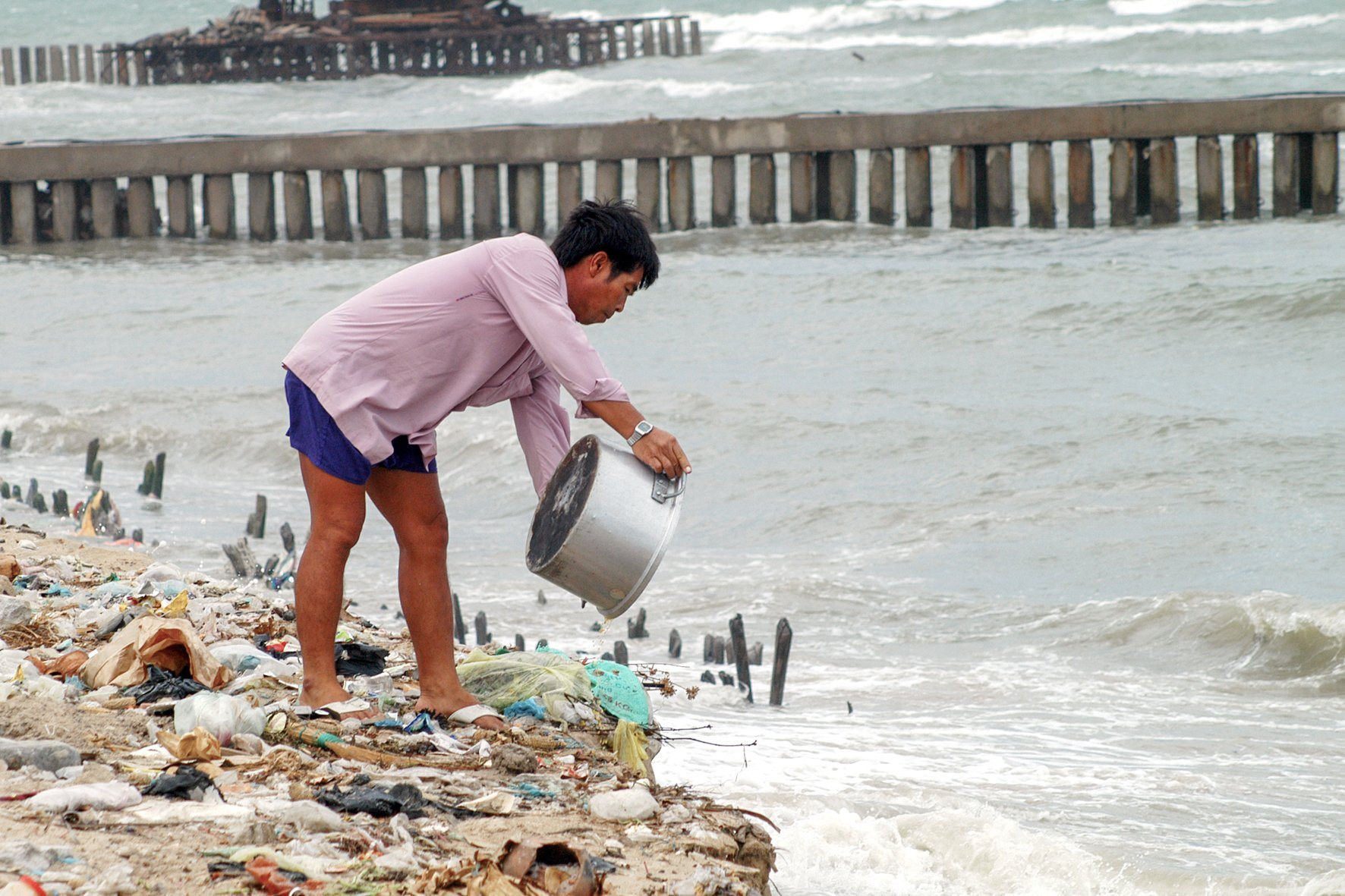
Those responsible for causing pollution may be subject to fines
However, for this principle to be implemented in practice, it is necessary to address resource issues in the first hours of an incident. Downstream localities need to be able to mobilize forces, means and equipment to protect water sources, while recording costs, taking samples and preserving evidence. Once the cause and responsibility are determined, the polluting party must reimburse response and remediation costs and compensate for damages according to regulations.
From controlling the load at the source to coordinating between upstream and downstream, the general requirement is to shift from an approach of handling when pollution has spread to proactively controlling risks, preparing resources and organizing responses according to the progress of the incident.
Source: https://kinhtemoitruong.vn/kiem-soat-tai-luong-va-lien-ket-vung-trong-bao-ve-moi-truong-tu-nguong-chiu-tai-den-trach-nhiem-thuong-nguon-120023.html
 Environmental news
27/11/2026
CONTROLLING PETROLEUM POLLUTION AT THE SOURCE: SIMPLE TECHNICAL SOLUTIONS AND STRONG GRASSROOTS OVERSIGHT NEEDED
Large-scale oil spills are not the only threat to ecosystems; minor, daily oil leaks and discharges from service facilities, storage depots, and watercraft constitute a silent yet massive cumulative source of pollution. This was emphasized by Mr. Pham Van Son, Director of the Vietnam Environment Incident Response Center (SOS Environment), during a talk show on […]
 Environmental news
07/11/2026
POLLUTION CONTROL AT SOURCE: AN IMPERATIVE DEMAND FROM INCIDENT RESPONSE PRACTICE
In environmental protection, remediating pollution after contaminants have widely dispersed is vastly more difficult and costly than controlling them directly at the source. Drawing from years of hands-on experience in environmental incident response, Mr. Pham Van Son – General Secretary of the Vietnam Association for Conservation of Nature and Environment (VACNE) and Director of the […]
 Environmental news
04/11/2026
BA SON CORPORATION AND VIETNAM ENVIRONMENTAL INCIDENT RESPONSE CENTER: PROACTIVE PREVENTION AND MAINTENANCE OF OIL SPILL RESPONSE CAPABILITIES
Industrial manufacturing, ship building, ship repair, mechanical fabrication, machinery and equipment operations, as well as maritime services, all harbor inherent risks of environmental incidents, including oil spills. Given the diverse nature of its operations, ensuring safety and environmental protection remains a top priority for Ba Son Corporation throughout its production and operational management. The SOS […]