TANKER EXPLOSION IN THE STRAIT OF HORMUZ HIGHLIGHTS ENVIRONMENTAL RISKS OF MARITIME OIL TRANSPORT
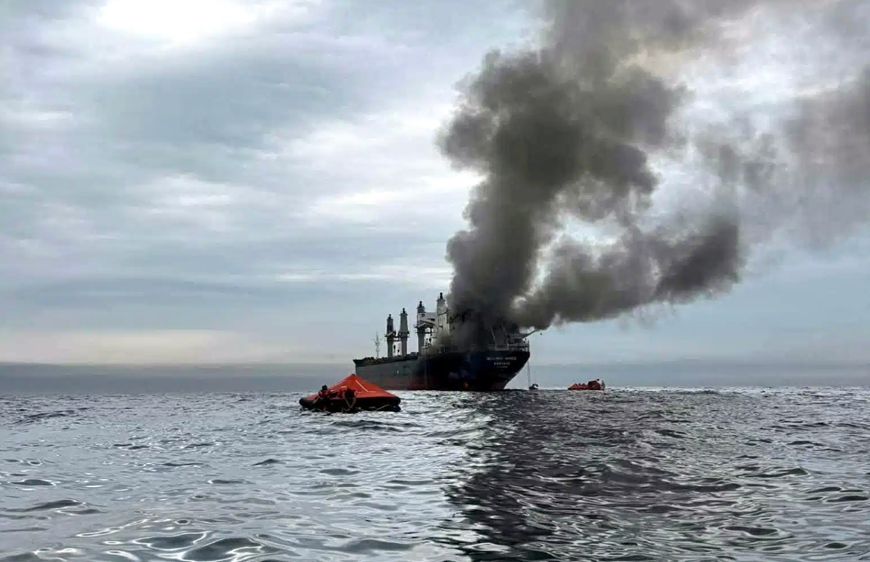
A reported mine strike involving a large oil tanker in the Strait of Hormuz has once again drawn attention to the environmental risks associated with transporting large volumes of oil through strategically important and heavily trafficked waterways.
On September 14, 2026, Iran’s Islamic Revolutionary Guard Corps (IRGC) reported that a large oil tanker exploded after striking a mine while attempting to navigate a southern route through the Strait of Hormuz. According to the report, warnings about the risks of the route had previously been issued. The nationality of the tanker had not been confirmed at the time of the report, and no detailed information on the environmental consequences of the incident was immediately available.
Oil spill collision in the Strait of Hormuz
The incident occurred in one of the world’s most important maritime energy corridors. VietnamPlus, citing shipping data, reported that the Strait of Hormuz normally handles a significant volume of global maritime oil transportation, with around 20% of seaborne oil passing through the waterway. Before the recent escalation in the region, around 125 large commercial vessels were estimated to pass through the strait each day, including oil tankers, gas carriers, bulk carriers and container ships.
When a maritime accident becomes an environmental emergency
An accident involving an oil tanker can develop into a complex emergency within a short period of time.
Collision, grounding, explosion, structural damage or failure of cargo-handling systems can result in the release of crude oil or petroleum products into the marine environment. The consequences depend not only on the volume released, but also on the type of oil, weather conditions, waves, currents, shoreline characteristics and the location of the incident.
Once oil enters the sea, the response challenge is no longer limited to the vessel itself. Oil can spread across the water surface, reach sensitive coastal ecosystems and affect fisheries, aquaculture, tourism and other marine activities.
This makes the speed of detection, containment and response particularly important.
Preparedness matters before an oil spill occurs
Major maritime oil spills are difficult to manage if response resources are mobilized only after the incident has already escalated.
Effective preparedness requires clearly defined responsibilities, trained personnel, suitable equipment, communication mechanisms and response plans that reflect actual local conditions. It also requires coordination between vessel operators, port authorities, maritime search-and-rescue forces, environmental authorities and specialized oil spill response organizations.
The experience of major oil spill incidents around the world shows that environmental response is closely connected with maritime safety, emergency management and the protection of coastal communities.
For countries with extensive coastlines and significant maritime activity, maintaining this preparedness is therefore not simply a response measure. It is part of broader risk management for marine transportation and energy infrastructure.
Lessons for oil spill preparedness
The Strait of Hormuz incident remains subject to further information regarding the vessel, the extent of any oil release and its environmental impact. Nevertheless, it illustrates a broader point: A maritime accident involving an oil tanker can quickly become an environmental emergency, and the capacity to respond must be prepared before the oil reaches the shoreline.
For maritime nations, the ability to identify risks, maintain response resources, mobilize trained personnel and coordinate multiple agencies can determine how effectively an oil spill is contained and how quickly environmental recovery can begin.
Source: https://www.vietnamplus.vn/tau-cho-dau-phat-no-sau-khi-va-phai-thuy-loi-o-eo-bien-hormuz-post1136183.vnp
 Environmental news
02/03/2026
Environmental news
02/03/2026INTERNATIONAL EXPERTS DISCUSS SOLUTIONS TO CONTROL POLLUTION IN SOUTHEAST ASIA
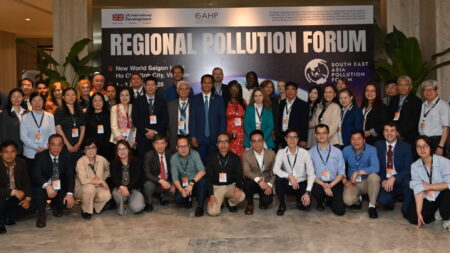
On the morning of March 2, 2026, in Ho Chi Minh City, the Vietnam Association for Conservation of Nature and Environment (VACNE), in coordination with the Global Alliance on Health and Pollution (GAHP), organized the Regional Pollution Forum (RPF) with the theme “Addressing Pollution to Improve Community Health.” The forum took place over two days, […]
 Environmental news
04/03/2026
Environmental news
04/03/2026INTERNATIONAL WORKSHOP SUMMARIZING THE PROJECT “AIR POLLUTION AND OPEN BURNING IN AGRICULTURE IN VIETNAM”
On the morning of March 4, 2026, in Ho Chi Minh City, with the support and permission of the Ministry of Agriculture and Environment, the Vietnam Association for Conservation of Nature and Environment (VACNE) coordinated with partners to organize the International Workshop summarizing the project “Air Pollution and Open Burning in Agriculture in Vietnam.” The […]
 Environmental news
06/03/2026
Environmental news
06/03/2026SCALING UP THE GREEN AGRICULTURE MODEL: LESSONS FROM THOSE WHO SUCCEEDED
After the project “Air Pollution and Open Burning in Agriculture in Vietnam,” implemented by GAHP in collaboration with VACNE with funding from Defra, alternative models to open burning in agriculture in Vietnam have demonstrated that rice straw is not “waste” that needs to be discarded, but rather a resource capable of generating economic and environmental […]