SUSTAINABLE APPROACH TO POST-HARVEST RICE STRAW MANAGEMENT
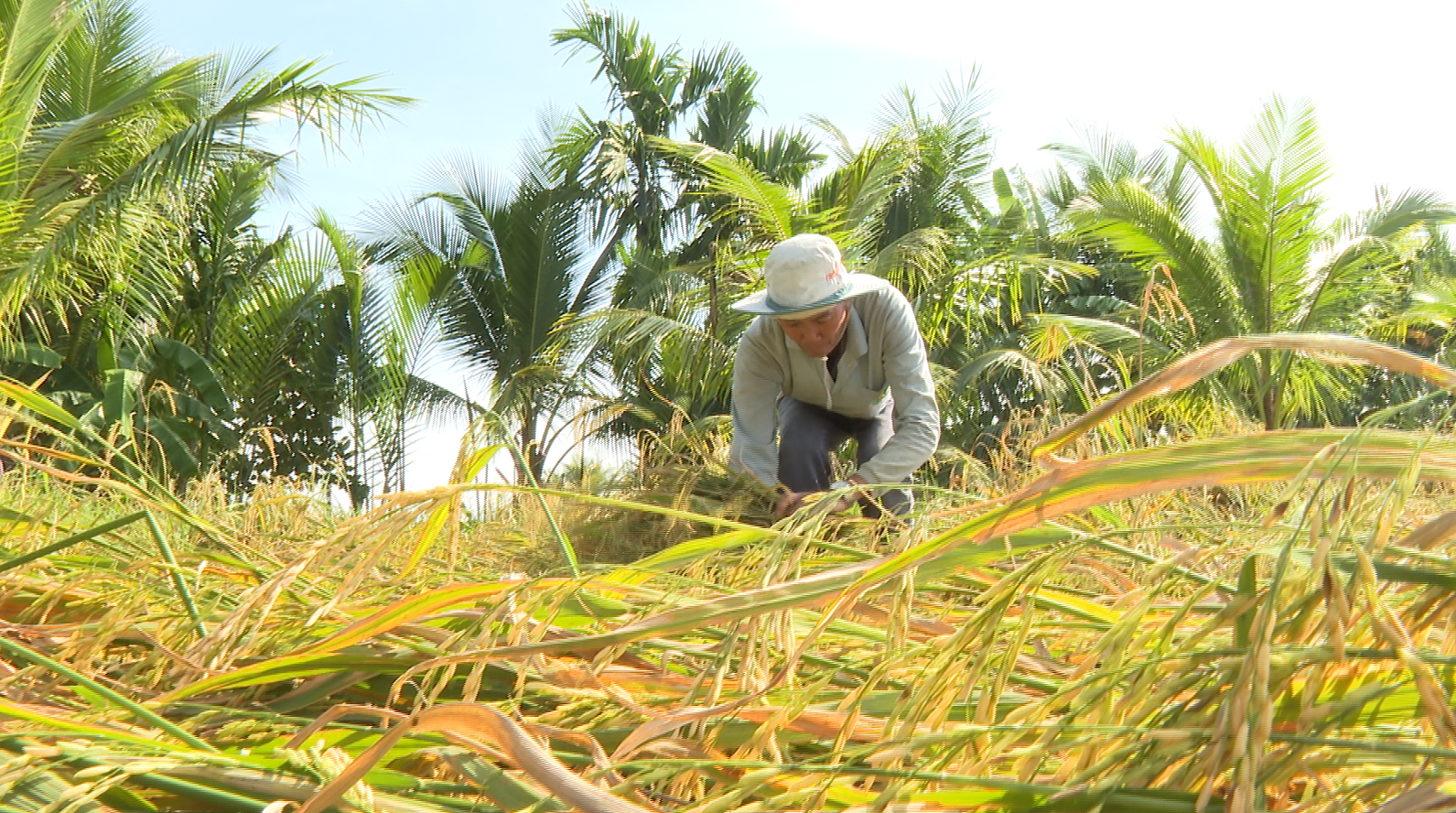
In the context of Vietnam gradually implementing its commitments to environmental protection, emissions reduction, and sustainable agricultural development, seeking and promoting alternatives to rice straw burning is not only a technical requirement but also a long-term policy challenge. From this practical reality, pilot models for treating rice straw using microbial products have been implemented, gradually creating clear shifts in the thinking and actions of local authorities and farmers.
When rice straw is no longer a “small matter” of the countryside
For many years, burning rice straw after the rice harvest has remained a common practice in many rural areas of Vietnam. This approach stems from long-standing farming habits, convenience, and seasonal pressure, but it has caused and continues to cause serious consequences for air quality, soil resources, and public health.

The farming practice of “field burning” is causing many consequences that affect the environment.
According to studies and reports from the Department of Crop Production and Plant Protection under the Ministry of Agriculture and Environment, Vietnam generates more than 156 million tons of agricultural by-products each year. Most of these are burned or discharged indiscriminately, causing air and soil pollution. This is also one of the significant sources of fine particulate matter (PM2.5) and toxic gases, increasing the risk of respiratory and cardiovascular diseases, while also affecting traffic safety and the quality of life of farmers.
Recognizing the negative impacts of burning agricultural residues on the environment, since 2022 the project “Assessment of Air Pollution from Open Burning in Agriculture in Vietnam,” implemented by the Global Alliance on Health and Pollution (GAHP), has carried out many research, assessment, and practical intervention activities in localities.
Within this project, the Vietnam Association for Conservation of Nature and Environment (VACNE) serves as the lead organization, funded by the UK Department for Environment, Food and Rural Affairs (Defra). As part of the project, the coordination of the Center for Community Capacity Development, Culture and Humanistic Civilization (Nhan Van) has helped farmers and local authorities in pilot communes develop alternative solutions to reduce pollution caused by burning agricultural residues, measure air pollution concentrations, and introduce combined products to support farmers in experimenting with “green transition” in agriculture.

Project experts coordinate to guide local farmers in implementing alternatives to open burning (source: Nguyen Tat Thanh University)
Unlike a single-approach method, the GAHP project is designed to integrate scientific research, pilot models, and community capacity building. The project’s focus is not only on measuring and assessing the level of air pollution caused by rice straw burning, but also on proposing and validating feasible alternative solutions that suit the farming conditions of Vietnamese farmers.
The role of local authorities and science in implementing the pilot model
In Khanh Trung commune (Ninh Binh province), a model for treating rice straw using microbial preparations has been implemented continuously for four years with close participation from the Commune People’s Committee, the Farmers’ Union, the Women’s Union, and rice-producing households. At a recent training conference for farmers on environmentally friendly agricultural practices organized by the Humanity Center, Mr. Hoang Minh Thinh – Vice Chairman of the Khanh Trung Commune People’s Committee stated that the collaboration between the local government and the Center has brought clear results in both environmental protection and production efficiency.

Mr. Hoang Minh Thinh – Vice Chairman of the People’s Committee of Khánh Trung Commune (Ninh Binh)
He said that rice fields where straw is treated with microbial products have higher soil porosity; the straw decomposes faster, significantly reducing the burning of agricultural residues in the fields. In particular, through field surveys, the amount of weedy rice when using microbial treatments has clearly decreased compared with seasons when this measure was not applied.
During the 2023–2024 period, the project brought air quality monitoring devices to the commune to directly compare fields using microbial treatments with those that still maintain the practice of burning straw. The measured indicators show a clear difference in air quality, thereby providing local authorities and residents with additional scientific evidence to fully recognize the impact of straw burning on community health.

Dr. Le Mai Nhat – Head of the International Cooperation Science Department, Plant Protection Institute, said that treating rice straw with microorganisms brings many dual benefits.
From a scientific perspective, Dr. Le Mai Nhat – Head of the International Cooperation Science Department, Plant Protection Institute, affirmed that using microbial products to treat rice straw provides many dual benefits. Not only does it help reduce air pollution, but this solution also helps preserve and restore soil microbial systems, create organic humus, improve soil structure, and nourish crops sustainably.
According to Dr. Nhất, when rice straw is burned, the high temperature destroys beneficial microorganisms in the soil, making the soil nutrient-poor and affecting the growth of crops in the following seasons. In contrast, using microbial products helps rice straw decompose quickly, which is particularly suitable for short-duration rice crops, thereby improving production efficiency and reducing dependence on chemical fertilizers or plant protection chemicals.
Although the initial investment cost for microbial products and equipment may be a barrier for some farming households, in the long term this solution brings clear economic efficiency by reducing input costs and increasing the yield and quality of agricultural products. This is an important basis for management agencies to consider developing appropriate support policies during the initial stage of implementation.
Social impact: From pilot models to policy orientation
From the perspective of a direct producer, Mr. Nguyen The Hung – Head of the Farmers’ Association Branch of Hamlet 16, Khanh Trung Commune, said that in the past burning rice straw was almost the only option because it was fast, convenient, and “everyone did it that way.” However, through training sessions and communication activities, he and local people have gradually become more aware of the harmful effects of burning rice straw on health and the environment.

Mr. Nguyen The Hung – Head of the Farmers’ Association Chapter of Hamlet 16, Khánh Trung Commune is continuing to use an alternative solution to burning rice straw.
When applying microbial treatment to rice straw, Mr. Hưng and many other farming households have observed clear improvements in soil quality. The rice grows stronger, suffers from fewer pests and diseases, and both yield and grain quality increase. Notably, the use of microorganisms helps shorten the time needed to prepare the land for the next crop, while reducing labor and production costs. From these practical results, the model has spread within the community, contributing to ending the practice of burning rice straw in many of the commune’s fields.
The results achieved in Khánh Trung Commune show that treating rice straw with microbial products is not only a technical solution but also a feasible approach for building green and sustainable agricultural policies. However, to move from pilot projects to wider adoption, coordinated participation from different levels of government, scientific organizations, and the farming community is needed.

Effective models partly owe their success to policies that support farmers
According to experts, institutionalizing effective models through support policies for communication, training, equipment, and inputs during the initial phase is a key factor. At the same time, the direction and supervision of local authorities will determine the level of success in the process of transforming farming practices.
From the practical implementation of the GAHP project, it can be seen that when policies are built on scientific evidence and community consensus, changing production behavior toward sustainability is entirely feasible. This is also an important premise for Vietnam to gradually reduce rural air pollution, protect public health, and move toward an agricultural sector that develops in harmony with the environment.
SOS
 Environmental news
02/03/2026
Environmental news
02/03/2026INTERNATIONAL EXPERTS DISCUSS SOLUTIONS TO CONTROL POLLUTION IN SOUTHEAST ASIA
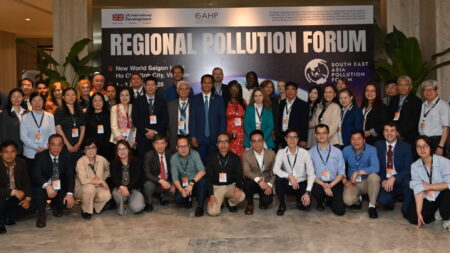
On the morning of March 2, 2026, in Ho Chi Minh City, the Vietnam Association for Conservation of Nature and Environment (VACNE), in coordination with the Global Alliance on Health and Pollution (GAHP), organized the Regional Pollution Forum (RPF) with the theme “Addressing Pollution to Improve Community Health.” The forum took place over two days, […]
 Environmental news
04/03/2026
Environmental news
04/03/2026INTERNATIONAL WORKSHOP SUMMARIZING THE PROJECT “AIR POLLUTION AND OPEN BURNING IN AGRICULTURE IN VIETNAM”
On the morning of March 4, 2026, in Ho Chi Minh City, with the support and permission of the Ministry of Agriculture and Environment, the Vietnam Association for Conservation of Nature and Environment (VACNE) coordinated with partners to organize the International Workshop summarizing the project “Air Pollution and Open Burning in Agriculture in Vietnam.” The […]
 Environmental news
06/03/2026
Environmental news
06/03/2026SCALING UP THE GREEN AGRICULTURE MODEL: LESSONS FROM THOSE WHO SUCCEEDED
After the project “Air Pollution and Open Burning in Agriculture in Vietnam,” implemented by GAHP in collaboration with VACNE with funding from Defra, alternative models to open burning in agriculture in Vietnam have demonstrated that rice straw is not “waste” that needs to be discarded, but rather a resource capable of generating economic and environmental […]