THERE ARE MICROORGANISMS IN THE FIELD, RICE IS “GREEN” AFTER HARVEST

In the context of rice production under pressure from climate change (climate change) and increasing material costs, the model of treating rice straw with microbial products in the field by the Global Alliance for Health and Pollution (GAHP), in collaboration with the Vietnam Association for the Protection of Nature and Environment (VACNE) has been implemented in An Truong commune (Vinh Long). are creating obvious changes: Soil is free of organic poisoning, rice is healthy, pests and diseases are reduced, input costs are saved, income is increased for farmers…
From struggling with organic poisoning, pests and unstable yields, many households have recorded “fresher” soil, strong rice growth, reduced input costs and improved economic efficiency.
Benefits seen right in the field
Mr. Duong Van Cao, Chairman of the Farmers’ Association of An Thanh hamlet (An Truong), is one of the households participating in the model from the beginning. In the past, people in the hamlet often fell into the situation of “losing the season – losing the season”, especially when the crop was at the time of heavy rain or flooding. Post-harvest rice straw is often used as feed for cows and buffaloes, but when it rains heavily, the rice straw is drying and damp, so it will have to be buried in the ground, which is more likely to cause organic poisoning, making rice easy to yellow leaves, poor growth and more fertilizer costs.

Mr. Duong Van Cao – Chairman of the Farmers’ Association of An Thanh Hamlet (An Truong, Vinh Long)
From the above inadequacies, taking into account the cost of processing straw and implementing a new crop, it will be very expensive, or the yield will be unstable, leading to a deficit in farmers’ income,… Therefore, after being mobilized to participate in the model, Mr. Cao said that he himself and 56 households in the hamlet began to use microbial preparations to treat rice straw from Nguyen Tat Thanh University (NTT University) in the field.
Although in the early crops, people were still surprised, even “did not know how to mix it correctly”, because the preparation was still thick and difficult to spray with a machine. But after being adjusted by the University of Agriculture to be thinner and still maintain the same nutritional content, farmers began to see obvious effects after many crops such as: Farming efficiency reached 60-70%, completely reducing the situation of ghost rice and rice; pests attack less, thanks to the balance of the microflora in the soil; significantly reducing the amount of pesticides, herbicides and fertilizers, leading to a sharp decrease in costs; the soil is loose, there is no more organic poisoning after burying the straw.

Rice “greens again” after using microorganisms in the fields of people in An Truong commune, Vinh Long
“In the past, the straw was flooded with water, but the next crop had to remove a lot of manure. Now treated with microorganisms, the soil is noticeably stronger, the rice stands evenly, but the cost has decreased. People are very happy!” – Mr. Cao shared.
“Efficiency up to 70%, reducing costs by tens of percent”
Mr. Nguyen Van Tu, also a farming household in An Thanh hamlet, said that the rice crop after using microorganisms can be assessed to be 70% effective. The changes that impressed him the most were: Better water retention; the soil is loose, the roots are strong, the rice stands evenly; ghost rice has decreased sharply, which many farmers consider as an “obsession” and guard in their hearts.

Mr. Nguyen Van Tu – Farmer of An Truong commune (Vinh Long) applies the model of using microbiology of GAHP and VACNE
Compared to chemical fertilization as before, Mr. Tu said that the cost has “decreased by tens of percent”, while the output has not decreased but is more stable. Realizing that the efficiency has improved markedly from the rice crops before using microorganisms, saving more input costs, cheaper than buying chemical fertilizers and pesticides, people in the hamlet increasingly trust and actively use microbial products for their rice fields. at the same time, spreading the model to neighboring fields.

Mr. Tran Van Phong, Head of An Thanh Hamlet Board (An Truong) emphasized the effectiveness of using microorganisms
From the perspective of production organization, Mr. Tran Van Phong, Head of An Thanh Hamlet Board (An Truong), sees this as a change not only in terms of technology but also in terms of farmers’ farming thinking. Mr. Phong said that in the past, most households had thick rice stalks because they used a lot of chemical fertilizers and pesticides to “keep the fields”, leading to blighted and flooded soil, which is susceptible to temperate diseases and unstable yields. For many years, the situation of “everyone is strong”, sowing at the wrong time also makes the harvest face obstacles and the selling price is precarious.
When the program “One million hectares of high-quality, low-emission rice” was implemented, along with technical support from GAHP – VACNE and companion units, in a short time, the applied area in Vinh Long reached 26-27 hectares, then expanded to 50 hectares with the support of varieties and preparations from the State and enterprises.
“The most important thing is that people see the effect with their eyes, see that the rice is stronger, the soil is less toxic, the fertilizer is reduced, and the drug is reduced. That’s convincing. But if you don’t see anything, the people will not follow you…” – Mr. Phong emphasized.

The effectiveness of using microorganisms for rice and straw treatment is clearly demonstrated
At the same time, he also noted: Using microorganisms must be 2-3 or more cases to clearly see the impact on the soil and microbiome. However, people in the hamlet all agree that this is a sustainable direction, in line with the requirements of reducing emissions, protecting the environment, and improving the quality of rice grains.
From small models to scalability
The model of using microbiology in An Truong commune shows that this is not only a technical pilot, but a program to change the farming mindset, with the close companionship of GAHP and VACNE. These two units play the role: Monitoring and evaluating the effectiveness of each case; training farmers on circular agriculture and emission reduction; connecting farmers, scientists and businesses providing microbial products,…

The GAHP – VACNE project collaborates with Nguyen Tat Thanh University in bringing microbial products to farmers
It is thanks to this support that people who are used to chemistry and old ways of doing things now boldly change. The model not only handles the problem of post-harvest straw, but also builds a rice production ecosystem: Less dependence on chemicals; taking advantage of by-products; reduce environmental pollution; increase the resistance of the soil and plants. This is also the core requirement of the circular agriculture and green agriculture strategy that Vietnam is aiming for.
Currently, the model in An Truong commune has helped to completely treat straw, no longer burning traditional straw causing air pollution and harm to health. People are happy to see that the fields are clean, the soil is loose, the rice is even, and the pests and diseases are reduced.
This trust has spread to neighboring hamlets and communes. Local leaders also said that the model can be scaled up when there are enough sources of preparations and technical support packages from GAHP, VACNE and businesses. In the context of the need for sustainable rice production, reducing emissions and meeting higher export standards, models such as An Truong commune are the first “brick” to build a quality, greener and cleaner agriculture.
SOS
 Environmental news
29/11/2025
Environmental news
29/11/2025WHEN FARMERS MASTER GREEN “TECHNOLOGY”
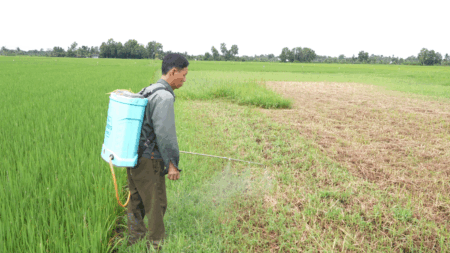
In Vinh Long, in the midst of the rice fields that are entering the new season, people have begun to get used to the image of farmers spraying microbes with a strangely confident appearance, this is the confidence of those who used to be skeptical, embarrassed, used to think that “burning copper is still the […]
 Environmental news,SOS Environment's activities
20/11/2025
Environmental news,SOS Environment's activities
20/11/2025WHEN THE HARVEST SEASON TURNS INTO THE “SMOKE SEASON”: WHY DOES THE BURNING OF RICE STRAW STILL LAST?
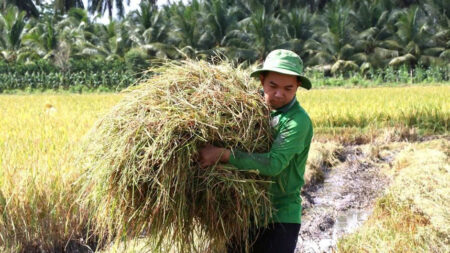
According to environmental experts, behind the smog pollution caused by straw burning is a chain of deep causes coming from traditional farming practices, gaps in support policies, difficulties in the economy, equipment, and lack of synchronization in law enforcement,… Every year, at the peak of the harvest season, the suburbs of Hanoi and the Northern […]
 Environmental news,SOS Environment's activities
20/11/2025
Environmental news,SOS Environment's activities
20/11/2025BEHIND THE WHITE SMOKE: THE “SILENT” AGENT OF AIR POLLUTION
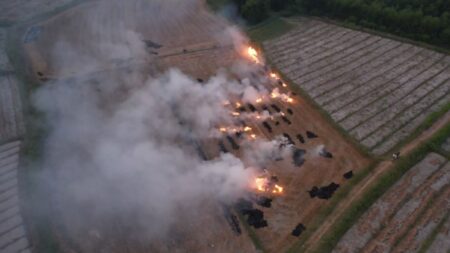
When it comes to air pollution, we often think of car smoke, smoke from factory chimneys, or dust from construction projects,… However, behind that conspicuous white smoke, there is a “silent agent” that is quietly covering the atmosphere, which is the burning of straw harvested after each harvest. This seemingly harmless activity produces large amounts […]