DO YOU KNOW ABOUT THE GENERAL SPILL RESPONSE PROCEDURE?

- 10/07/2025 – There are many ways to respond to the spill procedure.

There may be various ways to make handicrafts, or some ways are more complicated; however, to ensure the process, we all have THE GENERAL SPILL RESPONSE PROCEDURE, which can be applied to almost all liquid spills. Only trained crew (having the required materials and appropriate Personal Protective Equipment) are allowed to participate in the spill response procedure:
- Stay away from the spill: The first person to detect the spill or leak must stay away from that area to evaluate the situation without exposing themselves to any danger. This may not be necessary if the nature of the spill is known and the spillage is insignificant.
- Evaluate the possible maximum spread of the spill: Evaluate the spill in the condition of safety/ Identify – Type of spill; The volume and extent of the spill and whether it has stopped or not; Whether there is a risk of two chemicals coming into contact with each other; Any unusual features such as foaming, odors, fires,…
- Is this an Emergency? Spills or leaks that a few personnel on the spot can clean up are not usually emergencies. Emergencies are specified in the Emergency Response Plan with training requirements. If it is difficult to identify the spill clearly or someone is seriously injured, consider it an emergency.
- Make sure everyone is safe, even if it is a minor spill: When reporting a spill, do not leave the spill unattended. Establish a safe zone that will keep non-emergency response personnel well out of danger. The training level of a member is the basis for determining the participation level of that member in clean-up activities.
- Identify the spilled material: Is it flammable, combustible, toxic and volatile, toxic or corrosive and non-volatile, or an oxidizing agent? The label and Material Safety Data Sheet of the product should give information on safe clean-up.
- Plan to clean up the spill: The general procedure for common types of spills and leaks should be a part of the Emergency Response Plan and training, Considering factors such as rain and wind…
- Obtain proper spill control materials: Spill control materials include sorbents, containment socks, no-sparking tools (for flammable liquids), booms, neutralising fluids,…
- Put on appropriate PPE: Personal Protective Equipment (PPE) includes respirators, gloves, goggles,… as needed.
- Stop the source of the spill or leak: Locking the valve, patching the leaky hose, draining the tank of putting up the container of liquid.
- Stop the spill from spreading: This can include the use of appropriate absorbent/ containment materials such as socks (land) and booms (water), shutting down ventilation systems to keep gases and vapours from spreading, and plugging drains to prevent liquid from leaking into water.
- Use appropriate sorbent and equipment: Note – Particulate sorbent are primarily suitable for cleaning up small spills and the residues left over after a large spill. Absorbent pads can be used to collect the bulk liquid first. Avoid getting absorbent pads to over – saturate.
- Dispose of contaminated materials properly: Contaminated spill control materials and disposable PPE have to be disposed of as hazardous waste, Contaminated tools and non-disposable PPE should be safety decontaminated and stored in clean plastic bags for future use.
- File an incident report: The incident report should be filed by person responsible for EHS in the organization, for ever spill, including non-emergency spills. Evaluate your plan to determine if any changes ar required. Replenish all supplies.
Incidents can happen unexpectedly and without warning. Therefore, it is necessary for us to understand how to respond and grasp the incident handling process to make our lives safer.
___________________________________________________________
VIETNAM ENVIRONMENTAL INCIDENT RESPONSE CENTER
Address: P203 – A5, Thang Long International Village, Tran Dang Ninh street, Nghia Do ward, Hanoi.
Hotline: 1800 6558 – Email: sos@sosmoitruong.com
 Environmental news,SOS Environment's activities
20/11/2025
Environmental news,SOS Environment's activities
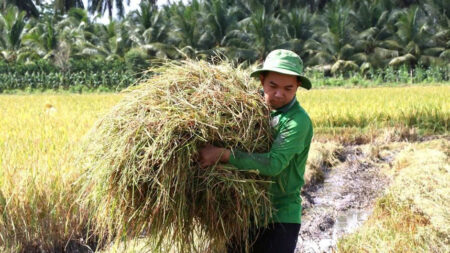
20/11/2025WHEN THE HARVEST SEASON TURNS INTO THE “SMOKE SEASON”: WHY DOES THE BURNING OF RICE STRAW STILL LAST?
According to environmental experts, behind the smog pollution caused by straw burning is a chain of deep causes coming from traditional farming practices, gaps in support policies, difficulties in the economy, equipment, and lack of synchronization in law enforcement,… Every year, at the peak of the harvest season, the suburbs of Hanoi and the Northern […]
 Environmental news,SOS Environment's activities
20/11/2025
Environmental news,SOS Environment's activities
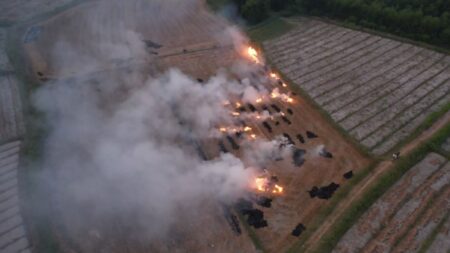
20/11/2025BEHIND THE WHITE SMOKE: THE “SILENT” AGENT OF AIR POLLUTION
When it comes to air pollution, we often think of car smoke, smoke from factory chimneys, or dust from construction projects,… However, behind that conspicuous white smoke, there is a “silent agent” that is quietly covering the atmosphere, which is the burning of straw harvested after each harvest. This seemingly harmless activity produces large amounts […]
 Environmental news,SOS Environment's activities
26/09/2025
Environmental news,SOS Environment's activities
26/09/2025SOS MOBILIZED FORCES TO RESPOND TO THE UK MILITARY SHIP – HMS RICHMOND AT NHA RONG PORT, SAIGON
26/9/2025 – The Vietnam Environmental Incident Response Center is honored to be the unit selected by the British military ship HMS Richmond to be on duty when it docks at K1 Bridge – Nha Rong Port, Saigon. Recently, the UK military ship HMS Richmond docked at K1 Wharf – Nha Rong Port (Saigon), and the […]