FROM STRAW TO MONEY: BIOMASS PELLET MODEL IN RURAL AREAS

Vietnam is one of the world’s top rice-producing and exporting countries, ranking second globally, with straw output of 45–50 million tons each year, mainly concentrated in the Mekong Delta and the Red River Delta. However, of this enormous resource, only about 18% of straw is properly collected and utilized, while nearly 80% is wasted or burned directly in the fields, causing air pollution, greenhouse gas emissions, and negative impacts on the living environment.
In response to this situation, some businesses and localities have experimented with models for collecting and processing straw using microorganisms and producing biomass pellets – an initiative that not only creates new economic value but also contributes to the goal of sustainable agricultural development, reducing greenhouse gas emissions, and improving livelihoods for rural communities.
A “forgotten” resource full of potential
According to Mr. Nguyễn Duy Bình, Director of Lam Sơn Environmental Sanitation Joint Stock Company (Thanh Hóa), Vietnam’s rice-based agriculture generates an enormous amount of straw every year. However, most of it is still considered a by-product, because straw from wet rice production produces the highest emissions when burned directly, creating greenhouse gases.

Mr. Nguyen Duy Binh – Director of Lam Sơn Environmental Sanitation Joint Stock Company (Thanh Hoa)
Therefore, properly handling rice straw is not only an environmental issue but also an opportunity to develop a circular economy and use resources more efficiently. Mr. Bình believes that producing biomass pellets from rice straw is a solution that transforms “waste” into a valuable product, partially replacing fossil fuels while helping reduce emissions and creating new income opportunities for farmers and businesses.
In addition, the process of producing biomass pellets is not simply grinding straw and compressing dry straw into pellets as commonly seen. To achieve optimal quality, rice straw needs to be treated through scientific steps, from collecting straw after harvest in the fields or at gathering points; applying microbial treatment to help the straw decompose naturally faster, reduce moisture and toxicity; to grinding and compressing it into pellets under high pressure, creating a dense, uniform product that is easy to transport and store.
At the same time, Mr. Bình also explained: “Rice straw contains many components such as cellulose (about 70%) and lignin (16%). If not properly treated, it will produce toxic smoke and fine dust when burned. Mixing microorganisms during the production process helps the straw break down, blend more evenly, and significantly reduce emissions during use. This is the step that turns waste into clean energy.”

Straw is collected at a pellet production facility in Dong Thap.
In addition, biomass pellets are easily used in industry, households, or boilers… with lower emissions compared to traditional coal or FO/DO oil, while also helping reduce residues of CO2, CH4, and other greenhouse gases.
Economic – environmental – social benefits for rural areas
Instead of burning straw or leaving it unused, people can collect it and sell it to biomass pellet manufacturing plants. This is a considerable source of income, especially in major rice-growing regions such as the Mekong Delta and the Red River Delta. In practice, the purchase price of straw by weight can improve by 30 – 50% compared to before. For example, in Ninh Bình, collecting straw after harvest has reduced open-field burning by up to 80% and generated a significant source of income for farmers from selling straw for circular agriculture solutions, bringing about 1.5 – 2 million VND per hectare.
At the same time, in 2024, Vietnam exported more than 6 million tons of pellets worth nearly 805 million USD, showing that the biomass market is growing rapidly and could expand to include straw as a raw material. Pellet manufacturing enterprises could thereby secure a stable supply of raw materials and reduce the cost of importing fossil fuels.
According to Mr. Bình, utilizing agricultural by-products to create biomass products not only addresses pollution but also creates new occupations in rural areas – from straw collection and transportation to production, packaging, and distribution. Pellet production also creates sustainable jobs in rural regions, helping reduce the burden of fuel imports and increasing value across the agricultural production chain.

Biomass pellets made from straw are produced directly at the Dong Thap workshop.
Besides economic benefits, environmental benefits must also be mentioned. Burning straw in the fields increases concentrations of fine particulate matter PM2.5, PM10, and toxic gases. Many provinces such as Dong Nai, Long An, Tien Giang province… have recorded rising pollution levels during the harvest season.
However, thanks to microbial treatment and compression, biomass pellets emit far less when burned compared to directly burning straw or using traditional fuels. This brings significant environmental benefits, helping to: reduce the risk of respiratory illnesses, lung disease, and other public health issues; reduce fine dust and smoke in rural and township areas; and move toward achieving Net Zero by 2050. Mr. Nguyen Duy Binh also emphasized: “For Viet Nam to achieve the goal of net-zero emissions by 2050, we need to integrate many solutions such as using renewable energy, managing agricultural waste, and increasing the use of clean biomass fuels.”
Flexible applications and diversified livelihoods
Not only aiming to produce biomass fuel, many businesses are also collaborating on research to diversify products from straw. Mr. Pham Van Thoan, Deputy General Director of Gia Bình Hồng Ngự Company (Dong Thap), said: besides producing pellets, we have cooperated with companies to find other ways to utilize straw, such as mixing it with organic waste to make vermicompost fertilizer. From straw, farmers can also extract many other values such as using it as cattle feed, growing mushrooms, and more.

Mr. Pham Van Thoan – Deputy General Director of Gia Binh Hong Ngu Company (Dong Thap)
Mr. Thoan also shared that many other environmental companies in Dong Thap are adopting this model, contributing to the promotion of a green circular value chain in agriculture by using rice straw as organic fertilizer, compressing straw into biomass pellets, or processing it into auxiliary agricultural materials. This not only helps diversify farmers’ sources of income but also contributes to reducing the use of chemical fertilizers and lowering soil and water pollution. Although there have been initial successes, the model still faces many obstacles. In particular, in terms of awareness and behavioral change, many farmers are still accustomed to the practice of burning straw after harvest because it is quick and convenient.
Therefore, changing this habit requires time, communication, and systematic, regular practical training. In addition, preferential policies and support for businesses and farmers participating in the biomass pellet production chain such as investment capital, taxes, and consumption markets are still lacking. Thus, there is a strong need for specific support policies to develop this model sustainably, from initial financial support to promoting domestic consumption and export of the products, Mr. Phạm Văn Thoan emphasized.
And to develop the model of producing biomass pellets from rice straw, building a production facility requires investment in pelletizing equipment, microbial treatment systems, and properly standardized storage warehouses. This also creates an initial cost barrier for small and medium-sized enterprises.

The model of producing straw pellets needs to be widely promoted in localities during the process of handling rice straw.
From the clear evidence above, it can be seen that the pellet production model not only creates a clean-burning product that replaces fossil fuels but also opens up opportunities to increase farmers’ income, promote a circular value chain in agriculture, and contribute to environmental protection. With support from authorities, the scientific community, and the business sector, this model can become an important part of Vietnam’s green agriculture development strategy for the 2025-2035 period.
Notably, in order to perfect the system of machinery and scientific processes for treating straw with microorganisms to serve biomass pellet production, Mr. Nguyen Duy Binh said that this model has received important support from the Global Alliance on Health and Pollution (GAHP) along with funding from the United Kingdom’s Department for Environment, Food and Rural Affairs (Defra).

The GAHP and Defra project has supported the straw pellet production model being replicated locally.
On that basis, the Vietnam Association for Conservation of Nature and Environment (VACNE) has coordinated, provided guidance, and connected relevant stakeholders to pilot the straw pellet model in Dong Thap Province, one of the localities with the country’s largest rice and straw production. The pilot implementation not only helps verify the technical, economic, and environmental effectiveness of the model, but also provides an important practical foundation for assessing its scalability in the context of Vietnam promoting solutions to reduce greenhouse gas emissions and develop circular agriculture.
SOS
 Environmental news
02/03/2026
Environmental news
02/03/2026INTERNATIONAL EXPERTS DISCUSS SOLUTIONS TO CONTROL POLLUTION IN SOUTHEAST ASIA
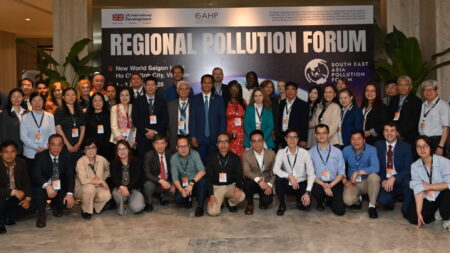
On the morning of March 2, 2026, in Ho Chi Minh City, the Vietnam Association for Conservation of Nature and Environment (VACNE), in coordination with the Global Alliance on Health and Pollution (GAHP), organized the Regional Pollution Forum (RPF) with the theme “Addressing Pollution to Improve Community Health.” The forum took place over two days, […]
 Environmental news
04/03/2026
Environmental news
04/03/2026INTERNATIONAL WORKSHOP SUMMARIZING THE PROJECT “AIR POLLUTION AND OPEN BURNING IN AGRICULTURE IN VIETNAM”
On the morning of March 4, 2026, in Ho Chi Minh City, with the support and permission of the Ministry of Agriculture and Environment, the Vietnam Association for Conservation of Nature and Environment (VACNE) coordinated with partners to organize the International Workshop summarizing the project “Air Pollution and Open Burning in Agriculture in Vietnam.” The […]
 Environmental news
06/03/2026
Environmental news
06/03/2026SCALING UP THE GREEN AGRICULTURE MODEL: LESSONS FROM THOSE WHO SUCCEEDED
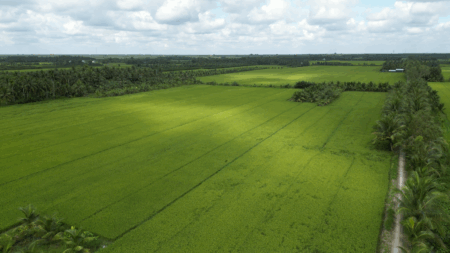
After the project “Air Pollution and Open Burning in Agriculture in Vietnam,” implemented by GAHP in collaboration with VACNE with funding from Defra, alternative models to open burning in agriculture in Vietnam have demonstrated that rice straw is not “waste” that needs to be discarded, but rather a resource capable of generating economic and environmental […]